Guides
Laser tattoo removal uses light pulses to break up ink in the skin
Lasers are now the main way to remove tattoos, and picosecond lasers are gaining favor [1]. Ink color, layering, where the tattoo came from and your skin type all affect the odds of a satisfactory result [1].
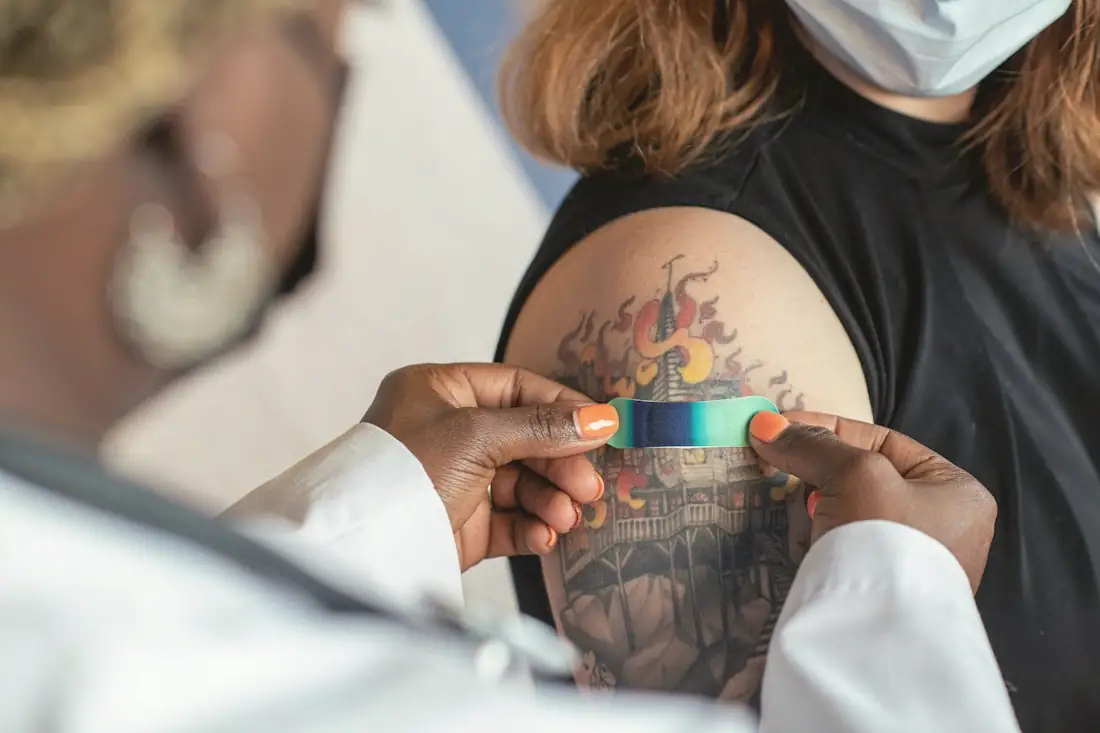
Laser tattoo removal has emerged as a reliable alternative to older methods
Lasers are the method of choice for removing tattoos today, because they work better than the methods used before [1]. Those older methods were surgical excision, chemical destruction and dermabrasion, which is sanding down the skin [2].
Demand is growing because cosmetic and corrective tattoos are more popular worldwide [2]. Quality-switched lasers, a longer-established laser type, are still considered the gold standard for removing unwanted ink [5]. Picosecond lasers, which fire far shorter pulses, are rapidly gaining favor [1].
A picosecond laser shatters ink with very short pulses
The laser sends pulses lasting a trillionth of a second or so. These create pressure waves that split the ink into tiny particles [4]. Your body then clears the particles through immune cells, the lymph system and the skin surface [4].
Because the pulses are so short, less heat builds up and there is less risk of heat damage to nearby skin [4]. They were originally developed for tattoo removal, and tattoo removal is the use with level I evidence, the strongest grade in one systematic review [3][4].
| Feature | Picosecond laser | Q-switched laser |
|---|---|---|
| Side effects | Fewer [4] | More heat-related effects [4] |
| Pain | Lower intensity [4] | Higher [4] |
| Downtime | Shorter [4] | Longer [4] |
| Results on black and blue ink | Better in four comparison studies [4] | Used as the long-standing standard [4][5] |
Your ink and your skin type shape how well removal works
Ink color is an important predictor of the result [4]. Yellow and orange ink have been hard to remove [4]. In one study, a picosecond laser removed 75 percent of yellow ink after 2 to 4 sessions [4].
- The origin of the tattoo and the colors in it affect the odds of a satisfactory result [1].
- Layering, where one tattoo sits over another, also affects those odds [1].
- Your Fitzpatrick skin type, a scale of how your skin responds to light, matters too [1].
- Picosecond lasers, especially at the 1064 nm wavelength, are more suitable than Q-switched lasers for darker skin types. They produce less heat, and heat causes burns and pigment changes [4].
Multicolored tattoos may respond to a picosecond laser that uses two wavelengths, 532 nm and 1064 nm [4].
Heat from lasers can cause burns and color changes in skin
High heat is what causes unwanted effects such as burns and skin that turns darker or lighter after inflammation [4]. Picosecond pulses produce less heat, which lowers this risk [4].
In one documented case, a multicolored tattoo cleared well, with no scars or blisters and only a few crusts [4].
Treatment can hurt. In that case a cold air device was used to reduce pain [4].
Laser tattoo removal raises these questions to ask before you book sessions
- Which type of laser will you use, picosecond or Q-switched, and why for my skin type? [4][1]
- Which colors in my tattoo will be hardest to remove? [4]
- Does layering in my tattoo change what you expect? [1]
- How far apart will sessions be? Some experience suggests at least 6 weeks may mean fewer sessions, because ink clearing is not finished at 4 weeks [4].
- What will you do to ease pain during treatment? [4]
- How do you lower the risk of burns and pigment changes for my skin? [4]
Sources
- Laser tattoo removal: laser principles and an updated guide for clinicians, Lasers in medical science
- Laser tattoo removal strategies: Part II: A review of the methods, techniques, and complications involved in tattoo removal, Journal of the American Academy of Dermatology
- A Systematic Review of Picosecond Laser in Dermatology: Evidence and Recommendations, Lasers in surgery and medicine
- [Picosecond lasers in dermatology], Dermatologie (Heidelberg, Germany)
- New tattoo approaches in dermatology, Dermatologic clinics